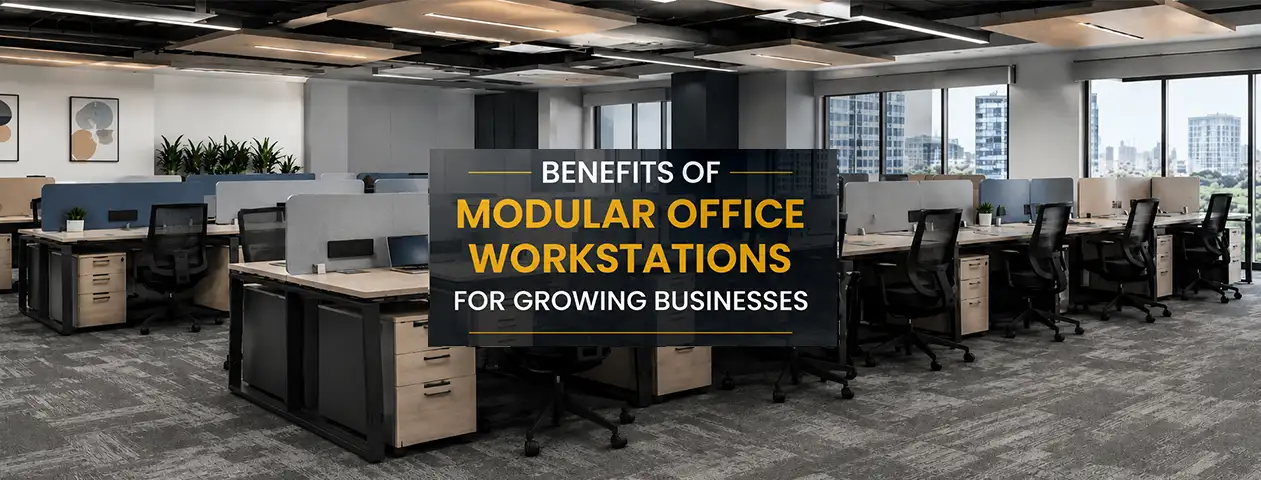
Modern workplaces are evolving rapidly, and businesses are increasingly seeking office furniture solutions that promote productivity, collaboration, and adaptability. Traditional office setups are gradually being replaced by flexible and scalable workspace solutions, making modular office workstations a preferred choice for organizations across industries.
From startups and IT companies to large enterprises and coworking spaces, modular office workstations offer numerous advantages that support changing workplace dynamics. Their ability to maximize space utilization, improve employee comfort, and adapt to future growth makes them a smart investment for modern offices.
In this article, we’ll explore the key modular office workstation benefits and why businesses are choosing these systems to create productive and future-ready work environments.
What Is a Modular Office Workstation?
A modular office workstation is a flexible workspace system designed to accommodate employees while optimizing office space and improving workflow. Unlike conventional office furniture, modular workstations can be customized, expanded, and reconfigured based on business requirements.
Modern modular office workstation solutions provide organizations with the flexibility to adapt their workspaces without requiring complete office renovations. These systems support various office layouts and are available in multiple seating configurations.
Key Modular Office Workstation Benefits
The following sections highlight the core modular office workstation benefits that make these systems ideal for modern workplaces.
1. Efficient Space Utilization
One of the biggest advantages of modular office workstations is their ability to maximize available floor space.
Smart workstation layouts help organizations accommodate more employees while maintaining comfortable and organized work environments. Whether it’s a small office or a large corporate workspace, modular systems ensure optimal use of available space.
This efficiency contributes to lower operational costs and improved workplace functionality.
2. Improved Employee Productivity
An organized workspace directly impacts employee performance.
Modular workstations create structured environments that reduce clutter and help employees focus on their tasks. Features such as integrated cable management, storage units, and ergonomic designs contribute to improved efficiency and workflow.
Businesses investing in modern modular office workstations often experience higher productivity and better employee satisfaction.
3. Flexibility and Scalability
Business requirements constantly evolve, and office layouts need to keep pace with growth.
Modular office workstation systems are designed to be scalable. Additional workstations can be added, configurations can be modified, and layouts can be adjusted without major disruptions.
This flexibility makes modular workstations ideal for:
- Growing businesses
- Expanding teams
- Hybrid workplaces
- Dynamic office environments
4. Better Collaboration Among Teams
Open and collaborative workspaces improve communication and teamwork.
Businesses seeking collaborative environments often prefer desking workstations, which are designed to encourage interaction and efficient team coordination.
These workstation layouts promote knowledge sharing and faster decision-making, resulting in improved organizational performance.
5. Enhanced Privacy and Focus
While collaboration is essential, certain roles require focused work environments.
Organizations looking for greater privacy often choose panel-based workstations, which incorporate partitions that minimize distractions and provide employees with dedicated workspaces.
These workstation systems are particularly beneficial for:
- Finance departments
- Human resources teams
- Customer support centers
- Administrative offices
6. Better Workplace Organization
Cluttered offices can negatively affect productivity and employee morale.
Modular office workstations offer integrated storage solutions, organized layouts, and cable management systems that help maintain a clean and professional workspace.
Better organization improves workflow and creates a more pleasant working environment.
7. Ergonomic Advantages
Employee comfort is a critical factor in workplace productivity.
Modern workstation systems are designed with ergonomics in mind, including options such as height adjustable workstations, along with ergonomic office chairs that support proper posture and reducing physical strain during long working hours.
Benefits include:
- Improved comfort
- Reduced fatigue
- Enhanced focus
- Better employee well-being
Ergonomic workstations contribute to a healthier and more productive workforce.
8. Professional Workplace Appearance
Office aesthetics influence employee morale and leave lasting impressions on clients and visitors.
Modular workstation systems create visually appealing office environments through consistent layouts and modern designs.
Organizations using customizable modular office workstation systems can align workspace design with their corporate branding and workplace culture.
9. Cost-Effective Long-Term Investment
Although modular workstations require an initial investment, they provide significant long-term value.
Their ability to adapt to changing requirements reduces the need for complete office redesigns and furniture replacements.
Businesses benefit from:
- Lower renovation costs
- Extended furniture life
- Better return on investment
- Reduced maintenance expenses
Know more about the Complete Office Workstations Pricing Guide in India to understand detailed cost ranges, material-based pricing, and budget options for modern office setups.
10. Supports Hybrid and Future Workspaces
Modern workplaces are embracing hybrid work models and flexible office designs.
Modular office workstations can easily adapt to changing workforce structures, making them ideal for future-ready organizations.
These systems support:
- Collaborative spaces
- Individual workstations
- Shared work environments
- Flexible seating arrangements
Their versatility makes them one of the most practical solutions for modern offices.
Types of Modular Office Workstations
Organizations can choose workstation systems based on their operational requirements and workplace objectives.
Desking Workstations
Open and collaborative layouts are best suited for teams that require frequent communication and interaction.
Explore desking workstation solutions for flexible workspace systems that maximize collaboration and space utilization.
Panel-Based Workstations
Privacy-focused layouts provide employees with dedicated workspaces while maintaining workplace efficiency.
Discover panel-based workstation systems designed for enhanced concentration and organized office environments.
Height-Adjustable Workstations
Ergonomic and adaptable workstations allow employees to alternate between sitting and standing positions, promoting comfort and supporting workplace wellness throughout the day.
Explore height-adjustable workstation solutions designed to improve flexibility, encourage movement, and create healthier, more productive work environments.
To stay updated with evolving workspace innovations, explore the latest modular workstation design trends shaping modern office environments, including smart layouts, ergonomic upgrades, and hybrid workspace solutions.
Why Modern Offices Prefer Modular Workstations
Businesses today require workspace solutions that are efficient, scalable, and adaptable.
Compared to traditional furniture systems, modular office workstations offer:
- Greater flexibility
- Improved productivity
- Better space utilization
- Enhanced aesthetics
- Future expansion capabilities
- Long-term cost efficiency
As organizations continue to evolve, modular workstation systems provide the foundation for creating productive and employee-friendly work environments.
Conclusion
The benefits of modular office workstations extend far beyond furniture. They help organizations improve productivity, maximize space utilization, support collaboration, and create adaptable workplaces that can evolve with business growth.
Whether you require collaborative setups, privacy-focused workspaces, or customized configurations, investing in modular office workstation solutions provides long-term value and supports modern workplace strategies.
By choosing the right workstation systems, businesses can create comfortable, efficient, and future-ready offices that enhance both employee performance and organizational success.
Frequently Asked Questions
What are the main modular office workstation benefits?
Modular office workstations improve productivity, optimize space utilization, support collaboration, enhance workplace organization, and provide flexibility for future growth.
Why are modular office workstations better than traditional office furniture?
Unlike traditional furniture, modular workstation systems can be customized, expanded, and reconfigured to meet changing workplace requirements.
How do modular office workstations improve productivity?
They create organized, ergonomic, and efficient workspaces that help employees focus and perform better.
Which type of workstation is best for collaborative offices?
Open and collaborative environments often benefit from desking workstations that encourage communication and teamwork.
Are panel-based workstations suitable for focused work?
Yes. Panel-based workstations provide privacy and reduce distractions, making them ideal for departments that require concentration.
Can modular office workstations be customized?
Yes. They can be customized based on office size, seating capacity, storage requirements, materials, and design preferences.
Are modular office workstations a good investment?
Yes. Their scalability, flexibility, and long-term durability make them a cost-effective investment for modern businesses.
Why are modular office workstations popular in modern offices?
They support evolving work styles, hybrid workplaces, and changing business requirements while improving employee productivity and workspace efficiency.